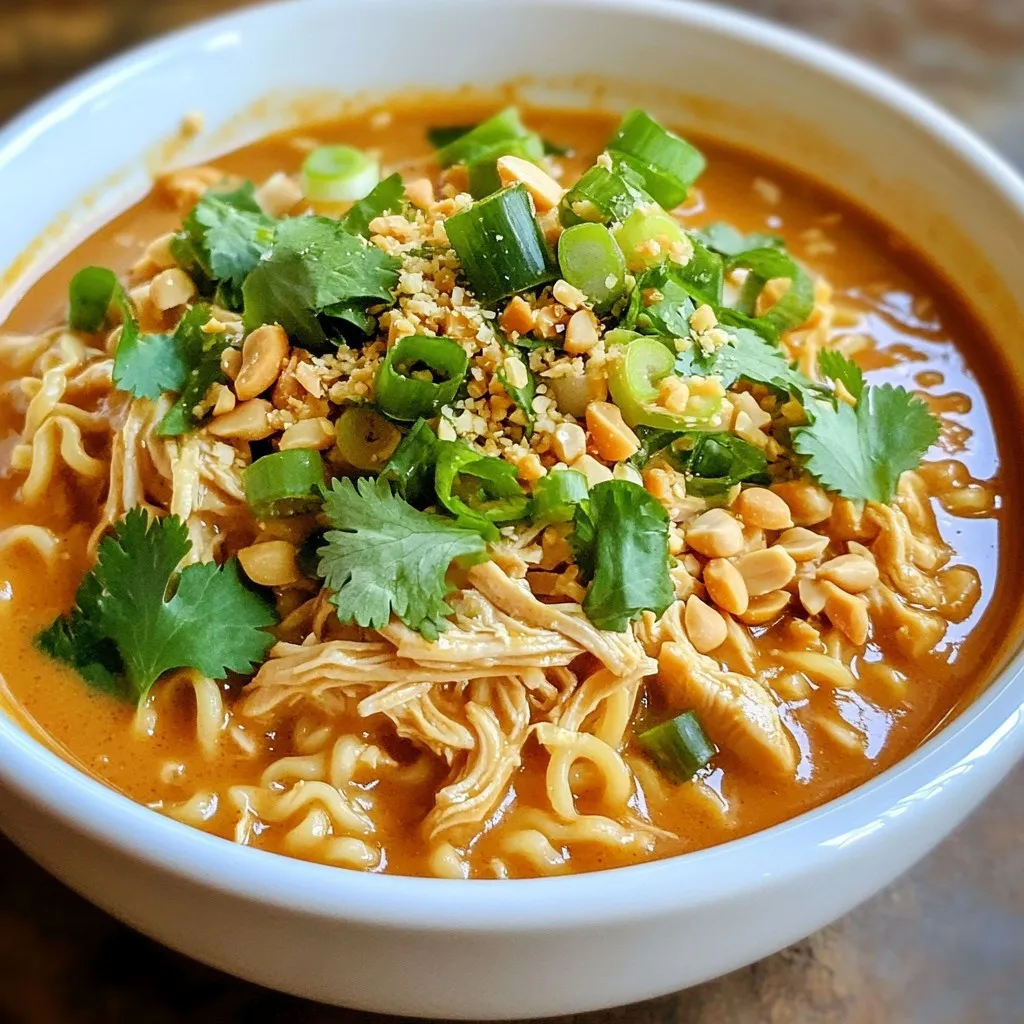
Craving a quick and tasty meal? Look no further! My Minute Thai Peanut Chicken Ramen is simple to make and full of flavor. In just minutes, you can whip up a bowl that impresses. I’ll share easy ingredients, step-by-step instructions, and tips to make it perfect every time. Ready to transform your dinner? Let’s dive into this delicious recipe!
Why I Love This Recipe
- Quick and Easy: This recipe can be prepared in just 15 minutes, making it perfect for busy weeknights.
- Flavorful Peanut Sauce: The creamy peanut butter combined with soy sauce and lime juice creates a deliciously rich sauce that elevates the ramen.
- Customizable: Add your favorite vegetables or adjust the spice level with Sriracha to suit your taste preferences.
- Nutritious Ingredients: With shredded chicken and fresh toppings like green onions and cilantro, this dish is both satisfying and healthy.
Ingredients
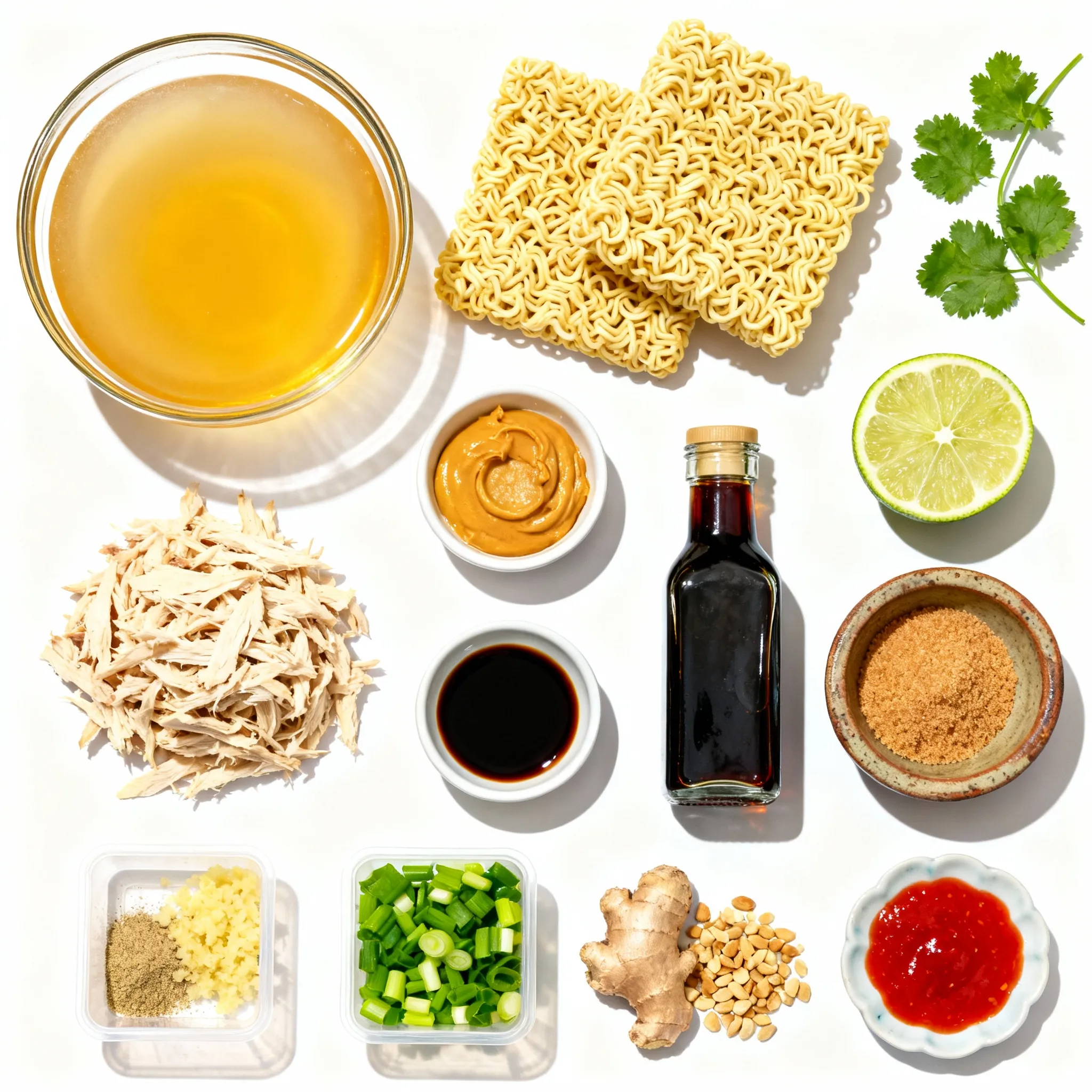
List of Ingredients
– 2 cups chicken broth
– 1 cup cooked chicken, shredded
– 2 packs instant ramen noodles (discard seasoning packets)
– 1/4 cup creamy peanut butter
– 2 tablespoons soy sauce
– 1 tablespoon sesame oil
– 1 tablespoon lime juice
– 1 tablespoon brown sugar
– 1 teaspoon ginger, grated
– 1/2 teaspoon garlic powder
– 1/2 cup green onions, chopped
– 1/4 cup cilantro, chopped (for garnish)
– Crushed peanuts (for garnish)
– Sriracha sauce (optional, for spice)
Recommended Brands for Ingredients
For chicken broth, I like Swanson or Pacific Foods. They have rich flavors. Use Jif or Skippy for creamy peanut butter. These brands blend well. For soy sauce, Kikkoman is a good choice. It adds depth to the dish. For sesame oil, try Spectrum or La Tourangelle. They have great quality oils.
Ingredient Substitutions
If you want a lighter broth, use vegetable broth. For a vegetarian option, replace chicken with tofu. You can use almond butter instead of peanut butter for a nut-free choice. If you don’t have lime juice, lemon juice works well too. For a soy-free option, use coconut aminos.
Step-by-Step Instructions
Preparation Steps
1. Gather all your ingredients. You need chicken broth, cooked chicken, and ramen noodles.
2. Get the peanut butter, soy sauce, sesame oil, lime juice, brown sugar, ginger, and garlic powder ready.
3. Chop the green onions and cilantro for garnish.
Cooking Instructions
1. In a medium pot, bring 2 cups of chicken broth to a boil over medium-high heat.
2. Once boiling, add 2 packs of instant ramen noodles. Cook them for about 3 minutes until they are tender.
3. While the noodles cook, mix the peanut butter, soy sauce, sesame oil, lime juice, brown sugar, ginger, and garlic powder in a small bowl. Whisk until smooth.
4. When the noodles are ready, lower the heat. Stir in the shredded chicken and the peanut sauce mixture.
5. Cook for another 1-2 minutes, stirring well. This will heat everything through.
6. Remove the pot from heat and stir in half of the chopped green onions.
Serving Suggestions
1. Serve the ramen in bowls while it’s hot.
2. Top with the rest of the green onions, chopped cilantro, and crushed peanuts.
3. If you like spice, drizzle some Sriracha sauce on top. Enjoy your meal!
Tips & Tricks
How to Perfect the Recipe
To make Minute Thai Peanut Chicken Ramen just right, focus on each step. First, bring the chicken broth to a rolling boil. This helps the ramen cook evenly. Use good-quality, low-sodium broth for a cleaner taste. When you add the noodles, stir them gently. This keeps them from sticking together.
Next, make the peanut sauce creamy. Mix the peanut butter, soy sauce, sesame oil, lime juice, brown sugar, ginger, and garlic powder thoroughly. The smoother the sauce, the better it mixes with the noodles and chicken.
Lastly, don’t skip the garnishes. Chopped green onions, cilantro, and crushed peanuts add fresh flavor and crunch. A drizzle of Sriracha can give a nice kick if you like heat.
Common Mistakes to Avoid
Many home cooks make the same errors when trying this recipe. One common mistake is overcooking the ramen. Cook them for just three minutes. If you cook them too long, they become mushy.
Another mistake is not whisking the sauce enough. If the sauce is lumpy, it won’t coat the noodles well. Mix until it’s smooth.
Also, don’t forget to taste! Adjust the flavors as you go. If the sauce is too salty, add a bit more lime juice. If it’s too sweet, add more soy sauce.
Serving and Presentation Tips
How you serve this dish can make it even better. Use deep bowls to hold the ramen and toppings. This keeps everything warm and makes it easy to eat.
Make sure to evenly distribute the garnishes. Place the green onions, cilantro, and peanuts on top for a colorful look. A squeeze of lime on each bowl adds brightness.
Consider using chopsticks for a fun touch. It’s a great way to enjoy the noodles. Your guests will love the vibrant colors and flavors of this dish!
Pro Tips
- Adjust the Spice Level: If you prefer a milder dish, skip the Sriracha or serve it on the side for individual spice control.
- Use Homemade Broth: For an even richer flavor, consider using homemade chicken broth instead of store-bought.
- Add Fresh Veggies: Enhance the nutrition and texture by adding vegetables like spinach, bell peppers, or carrots during the cooking process.
- Store Leftovers Properly: If you have leftovers, store the ramen and peanut sauce separately to prevent the noodles from becoming soggy.
Variations
Vegetarian Options
You can easily make this dish vegetarian. Instead of chicken, use tofu or tempeh. First, press the tofu to remove excess moisture. Then, cube it and sauté until golden. Replace chicken broth with vegetable broth for a rich flavor. This keeps the meal hearty and satisfying without meat.
Gluten-Free Adjustments
If you want a gluten-free meal, swap the soy sauce with tamari. Tamari is a great gluten-free alternative. Use rice noodles instead of instant ramen. Just be sure to cook them according to the package directions. This way, you can enjoy a tasty bowl without gluten.
Flavor Enhancements
To add more depth, try different spices. A pinch of cayenne pepper can boost the heat. You can also add fresh herbs like basil or mint for a fresh taste. For a nuttier flavor, sprinkle sesame seeds on top. These small changes can make your ramen unique and exciting.
Storage Info
How to Store Leftovers
To store your Minute Thai Peanut Chicken Ramen, let it cool first. Use an airtight container for best results. You can keep it in the fridge for up to three days. Make sure to label the container with the date. This way, you can enjoy it later!
Reheating Tips
When you are ready to eat the leftovers, add a splash of chicken broth. This helps keep the noodles moist. Heat it on the stove over medium heat. Stir often to warm it evenly. You can also use a microwave. Just cover it and heat in short bursts. Stir between each burst for even heating.
Freezing Instructions
If you want to freeze your ramen, it’s best to leave out the toppings. Store the ramen and sauce in a freezer-safe container. It can last for up to three months in the freezer. To thaw, place it in the fridge overnight. Reheat it as mentioned above once it’s thawed. This way, your meal stays tasty!
FAQs
Can I use different types of noodles?
Yes, you can use many types of noodles. Rice noodles work well in this dish. You can also try udon or soba noodles. Each type has a unique taste and texture. Just adjust the cooking time as needed. Make sure you cook them until they’re soft. This way, they blend well with the sauce.
How long does this recipe take?
This recipe is quick. It takes about 15 minutes to make. You can prep and cook in just 5 minutes. Most of the time is just boiling the broth and noodles. This makes it great for busy days or quick dinners. You can enjoy a tasty meal without spending hours in the kitchen.
What can I substitute for peanut butter?
If you need a peanut butter substitute, try almond butter. Sunflower seed butter is another good choice. Both give a nice flavor without peanuts. You can also use tahini, which is made from sesame seeds. Just remember to adjust the amount based on your taste. This ensures the sauce stays creamy and delicious.
This article covered essential ingredients and recommended brands for your recipe. I shared tips on preparation, cooking, and serving for the best results. You learned about ingredient swaps and variations, including vegetarian and gluten-free options. I also covered proper storage and reheating methods.
In the end, following these steps ensures a delicious dish every time. Enjoy cooking and sharing your meals with other